If your air conditioner starts dripping water indoors, it can be both worrying and messy. A small amount of water is normal when the unit is in cooling mode because it removes moisture from the air, creating condensate. However, this water should drain away safely through the unit’s drainage system. If you notice water running down the walls, pooling on the floor, or leaking from the unit, it usually means there’s a problem with drainage or airflow that needs to be checked.
Ignoring these signs can lead to damage to your walls, floors, and even electrical components, so it’s important to identify the cause early.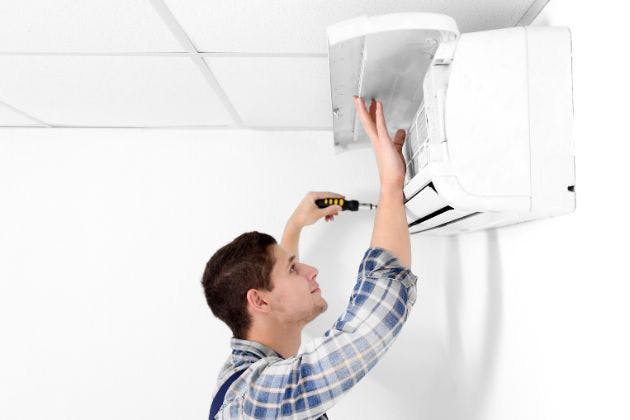
How air conditioning creates water in normal operation
When your air conditioner cools the air, it also removes moisture. This moisture forms droplets on the cold evaporator coil inside the indoor unit, similar to condensation on a cold drink.
The water should collect in a drip tray and then flow out through a condensate drain pipe to a safe discharge point outside or into a drain. If you see water indoors, it usually means this drainage path is not working properly.
Common reasons an air conditioning unit leaks water indoors
Most indoor leaks come back to the same basic problems: poor drainage, restricted airflow, or installation issues. Understanding these makes it easier to work out what is going on with your own system.
Blocked condensate drain line
The condensate drain is a small plastic pipe that carries water away from the unit. Over time, algae, dirt or sludge can build up and restrict the flow.
When the pipe blocks, water backs up into the drip tray and eventually overflows into your room. This is especially common in warm, humid weather when the system is working hard.
Pooling water directly under the indoor unit
Intermittent dripping during or just after a cooling cycle
Water is visible at or around the drain outlet outside
Dirty filters and evaporator coil icing
If filters are clogged, air cannot pass over the evaporator coil properly. The coil can become too cold and start to ice up. When the system stops, the ice melts and can overwhelm the drip tray.
In some cases, you may see ice on or behind the front panel, or feel reduced airflow from the unit. Repeated icing is a clear sign that something is not right and needs attention.
Incorrect installation falls on the drain
The indoor unit and drain pipe need a slight, continuous fall so that water can run away under gravity. If the unit is not level, or the pipe runs uphill at any point, water may sit in the tray instead of draining.
This is often an installation fault rather than a wear-and-tear issue, and it can cause frequent small leaks whenever the system is in cooling mode.
Cracked or damaged drip tray
Inside the unit, a plastic or metal tray collects the condensate before it drains away. With age, corrosion, accidental damage or poor-quality materials, this tray can crack.
Even a small crack can lead to water escaping into the casing and then out onto your wall or floor. This usually needs a professional repair or replacement part.
High humidity and heavy moisture load
In very humid conditions, your air con can produce a lot of condensate in a short space of time. If the drain is partially restricted or the system is undersized, it may struggle to cope.
You might notice more frequent dripping during heatwaves, with windows closed and lots of people in the room, or when drying clothes indoors nearby.
Portable units and full internal tanks
Portable or floor-standing units often collect condensate in an internal tank rather than draining it continuously. When the tank is full, the unit may shut down or leak around the base.
Check the user manual for how to empty the tank and re-fit it correctly. Never tip the unit at extreme angles as this can cause water to spill internally.
Safe, simple checks you can do yourself
Before you panic, there are a few straightforward checks that many homeowners can carry out safely. Always prioritise safety when dealing with electrical equipment and water.
Turn off the system and stay safe around electrics
First, switch off the air con at the controller and, if possible, isolate the power at the fused spur or switch. Mop up any standing water around the unit to reduce slip risks.
Keep water away from sockets, extension leads and other electrical equipment. If water has reached any electrics, do not turn them back on until an engineer has inspected the area.
Check and clean the air filters
Remove the front panel of the indoor unit and slide out the filters. If they look dusty or grey, they need cleaning. Most domestic filters can be gently vacuumed or rinsed with lukewarm water.
Allow the filters to dry fully before refitting them. Clean filters help airflow, reduce the chance of icing and improve efficiency and air quality.
Look for obvious blockages at the drain outlet
Find where the condensate pipe terminates outside or at a drain. Check for visible debris, algae growth, insects or kinks in flexible pipework that could impede flow.
You can often clear light surface debris by hand, but avoid pushing objects up the pipe, as this can compact a blockage further inside. Engineers use specialist vacuums or flushing equipment to clear stubborn blockages.
Avoid extreme temperature settings
Very low temperature settings can encourage coil icing, especially in smaller rooms. Try setting the thermostat to a more moderate temperature, such as 22 to 24 degrees Celsius.
Give the system time to stabilise and see if the leaking eases after cleaning filters and adjusting the set point.
Red flags that mean you should call an engineer
Some symptoms point to underlying issues that are not suitable for DIY fixes. Leaving these can risk damage to your property or the system itself.
Persistent icing on the indoor unit or refrigerant pipes
Leaks that return even after filter cleaning and basic checks
Water reaching or dripping near indoor electrical fittings
Strong, mouldy or musty smells from the air con when it starts up
Any suspicion of refrigerant problems, such as hissing, poor cooling or oily residue
Refrigerant systems must only be worked on by certified F-Gas engineers. Attempting to adjust or top up refrigerant yourself is unsafe and illegal.
Extra considerations for business premises
In offices, shops and other commercial spaces, indoor leaks often come from ceiling cassette units. These rely on small condensate pumps to lift water to a drain line above the ceiling.
If a pump fails or a float switch sticks, water can build up and leak through ceiling tiles. Regular maintenance, including pump function tests and drain flushing, is essential to avoid disruption and ceiling damage.
When to get professional air conditioning help
If your quick checks have not solved the problem, or you notice any of the red flags above, it is time to call a qualified engineer. A proper inspection will look beyond the surface symptoms.
GEO M&E Ltd provide F-Gas compliant air conditioning servicing and repair, including thorough drain testing, coil condition checks and condensate pump function tests. If you are in the Portsmouth area and need help with a leaking air conditioning unit, contact GEO M&E Ltd on 02392388799 or visit their Air Conditioning Servicing & Repair page to arrange a visit.